Monday, April 8, 2013

University of Essex visits to Essex Record Office


In February the Essex Record Office welcomed the whole of the University of Essex’s first year History undergraduates to the archive.

We first approached the History Department of the University in spring 2012 to suggest an undergraduate visit, and they were very keen that their students should become more familiar with the Record Office, and build their confidence in using primary sources and visiting archives in general. The visits were made a compulsory part of the students’ History Workshop module, which all first years sit.

The year group totals about 90 students, and their visits were split over 3 days. Not quite all of the students made it, with 77 visiting in total. The visits were a real team effort, involving staff from Outreach, the Public Service Team, the Archivists, and Conservation.

The aims of the visits were:
-    To introduce University of Essex first year History undergraduates to the Essex Record Office, and to break down any barriers that might stop them using the ERO
-      To give students confidence in using ERO resources
-     To give students a flavour of the variety of documents held and the ERO, and they types of projects that    they might be used for
-    To introduce students to the research process
-  To introduce students to some basic critical analysis of sources
-    To get the students to begin thinking about dissertation topics
-    To encourage students to visit the ERO again later in their degrees

The timetable for each day comprised a tour of the Record Office (including the Searchroom and its resources, the repositories, ERO ‘treasures’ and the Conservation Studio), the presentation of two short case studies of research using ERO sources, an introduction to the Essex Sound and Video Archive, and a chance to see a range of specially chosen original documents demonstrating the breadth of the collections. The students were then set a research task to be completed in the Searchroom, which required them to use microfilmed newspapers, online resources including the census, maps, wills and secondary material. The task was followed by a discussion about the advantages and disadvantages of different types of sources, and the nature of historical interpretation.

Evaluation
Evaluation exercises were conducted at the beginning and end of each visit, to test whether and how students’ perceptions of the ERO had changed. None of the students had previously visited the ERO, although a very small number had been to an archive before.

Would you visit the ERO for your research?

There was a dramatic turnaround in opinion from the vast majority (51) of students saying they would not visit, to the vast majority (55) saying that they would. This suggests that the visits achieved their principle aim of encouraging students to feel that the ERO could be useful to them and is a welcoming place to visit.

Perceptions
Also at the beginning and end of each visit we asked the students ‘What are your perceptions of the ERO?’

Overall the students’ perceptions were radically altered by the visit. By the end, most felt that the ERO was of more relevance to them and their studies, and had decided that the resources held are more useful and interesting than they had expected.


What have you learnt?
At the end of the visit the students were asked what they had learnt. The vast majority of the students learnt something positive during the visit; that the ERO is easy to use, how to use some of the equipment in our Searchroom, and that we had a bigger range of documents than they expected. Perhaps most significant were the comments that research should go ‘beyond the library’, and that archives are valuable for their studies. The comments also indicate a growth in the students’ confidence in dealing with primary sources, e.g. that reading old handwriting is achievable, and that research needs to be based on a range of sources.


What have you enjoyed/not enjoyed?
The overwhelming impression from the feedback is that the students had enjoyed themselves. The research task and the treasures were particularly highlighted as things that the students most enjoyed. Also mentioned were the tour, conservation, finding out about different types of sources, and some of the individual records we had shown them.


Conclusion and suggestions for future improvement
Overall the visits can be declared a big success. They achieved their aims of making the students feel more at ease with the archive and to see it as more relevant to them and their studies, and encouraged them to think about visiting again in the future.

All of the different elements of the visit (tour, case studies, research task, discussion) were enjoyed by the overwhelming majority of the students and most of them seem to have gained confidence in working with primary sources.

Only one student made an explicit suggestion for an improvement; they had enjoyed the task but said that they wish they had had longer for it, and a choice of task. This is rather contrary to what the staff felt on the day, in that most of the students seemed to race through the research task.

Overall, however, there was a really positive buzz around the visits, and it is hoped that they will become an annual fixture. We are also planning to send some staff members to the University next year when this cohort of students are planning their dissertations, to refresh their memories about their visits this year and to again promote the ERO as a convenient, friendly and useful place for them to undertake their research.

Wednesday, March 20, 2013

Archives for Learning and Education Section Annual Conference - Call for Papers


Bridging the Gap: Archives for HE/FE Students

Public Record of Northern Ireland, 24 June 2013


Increasing user participation and reaching out to new audiences rank high in the archives agenda for the 21st century. However, how are archivists ensuring that university and further education students, one of their traditional user-groups, are also part of this inclusive approach?

While training and induction sessions to the archives are often available to schoolchildren and adult learners, we expect students to navigate complex sets of catalogues and finding aids and to decipher difficult handwriting without having been trained to do so.

This year’s ALES conference will focus on the steps archivists are taking to bridge the gap and in so doing attract students into the archives to train and equip them with the necessary skills to approach archival research confidently.

A call for papers is put for 30 minute presentations focusing on practical experiences/case studies.

The purpose of the conference is:

•           To identify good practice across the whole sector and not exclusively amongst HE/FE archivists.

•           To exchange ideas and approaches to training for university and further education students.

•           To raise awareness amongst professional archivists about the need to take shared responsibility for providing this user-group with transferable skills that go beyond academic research.

•           To identify opportunities for collaboration and partnerships.

If you are interested please email a short abstract to Maria Castrillo at  m.castrillo@nls.uk. The deadline for submissions is 20 April.


Monday, March 4, 2013

Draft Proposals for the Revised History Curriculum for England


The Department of Education has recently published the draft proposals for the revised History Curriculum for England, Key Stages 1-3. 

You can access the proposed curriculum via the below link. You will find a link to the proposed history curriculum on the right hand side column.


 The ALES committee are co-ordinating a response on behalf of members of the Section and we would like to include your comments and suggestions, positive and negative.

 We have to respond before the 16th April 2013, so please email alison.diamond@nas.gov.uk with your thoughts as soon as possible. 

Wednesday, February 27, 2013

Zoom In - A Closer Look at Science


The British Museum's scientists and conservators invite you to the British Museum, Great Court on Saturday, March 23rd 2013, 11:00-16:00. This exciting events will allow you to take a closer look at science in the museum and discover how science unlocks the secrets behind the museums collections. 


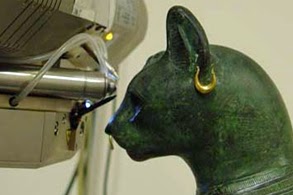
You will also have a chance to visit the Heritage Smells! demonstrations. You will have a chance to find out why objects smell and to use instruments to "sniff" old books, plastics or ethnographic artefacts.

Heritage Smells is a major collaborative research project seeking to understand the smells behind old objects and documents. 

This event promises to be a fun learning day for all visitors and will also provide a chance for heritage educators to seek inspiration for new ways to interpret their own collections.

Admission to the event is free. The event forms part of National Science and Engineering Week 2013.


Monday, February 11, 2013

Summary - ARA Officers' day


Members of ALES may be interested in the summary of the recent ARA Officers' day in Birmingham. In particular, Laura Cotton is leading in the development of a handbook for ARA officers detailing job descriptions and other essential information for those interested in or actually taking on the roles. Suggestions for what information should be included are welcome...

If you want to email suggestions to me at alison.diamond@nas.gov.uk, I will forward them to Laura.

Alison Diamond
ALES Chair

Tuesday, February 5, 2013

New Online Resources at National Records of Scotland


The education team at National Records of Scotland (NRS) is developing new online resources to support teachers and learners in the delivery of Curriculum for Excellence and National Qualifications.
Our approach is simple and straightforward: we wish to provide content that can be adapted by teachers to support different topics, themes and areas within the Scottish curriculum at different teaching levels. Our units will offer images of original sources, transcripts and background notes.


Please visit the resources and, if you have time, provide answers to the following questions by emailing education@nas.gov.uk .

Content and supporting text:

  • Which units did you use?

  • Is sufficient context provided to enable you to make full use of the resources?

  • We have chosen to make complete documents available as far as possible, believing that students should encounter the whole source rather than just selected extracts. Do you agree with this approach?

  • We are piloting both topic-based (eg. Scottish Suffagettes and The Great War) and thematic units (Letters and Diaries). Do you have a preference for either presentation and, if so, why?

Style and layout on screen:

  • Are you able to navigate the units to identify sources? Do you have any comments on the style of the pages?

  • Can you right click and save the images, and are they of sufficient quality for you to use them both electronically and in print form?

  • If you are able to test the images on a smartboard, please do so and let us know of any technical problems you encounter opening or using them.

  • We provide document transcriptions as printable Rich Text Format documents (rtfs). Are you able to access this type of file or would an alternative, eg. pdf, be preferable?

Your feedback will be really useful to us in developing our online service. Thank you for your time and assistance.

Sedburgh School Training Event


Sedbergh School is hosting a training event on May 16th. The event is aimed at School Archivists but may also be of use or interest to archivists working in small archives or those involved with creating education resources or exhibitions.

The Programme of events is as follows.

09.30       Refreshments will be available upstairs in Queens Hall
10.00       Welcome
10.05         Rachel Kneale: Cataloguing and Arranging in the School Archive Context
10.45       Katy Iliffe: Using Adult and Pupil volunteers in a School Archive
11.30       Paul Dyson: War Memorial Website
11.50       Pat Chandler: WW1: Preparing to commemorate the centenary
12.10       Group Discussion about WW1 commemorations
12.30       Lunch
13.10       Tour of the School Archive
13.30 David Clements: Archive Manager and Archive Browser. Cataloguing Software for a small archive
16.00 Departure

The cost is £10 which includes lunch and other refreshments through the day. Cheques payable to Sedbergh School Foundation. To book contact, Katy Iliffe of Sedbergh School Archive and Heritage Centre on 01539622275